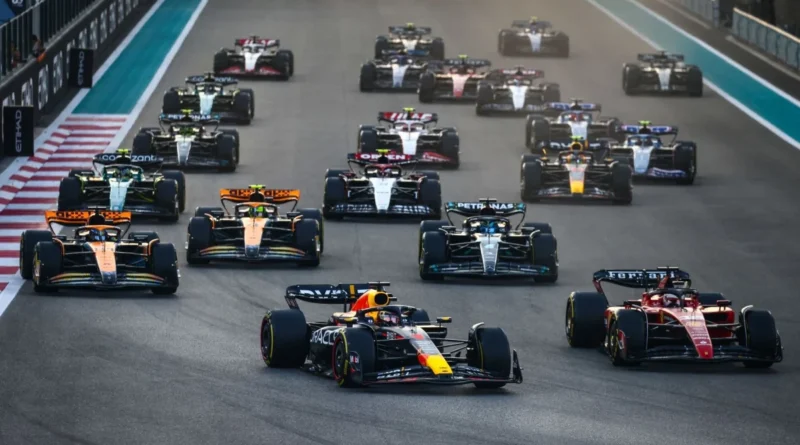
Formula 1 Explained: A Beginner’s Guide
Formula 1, commonly known as F1, is one of the most popular forms of motorsport in the world. It combines high-performance cars, advanced technology, skilled drivers, and strategic decision-making.
For someone watching Formula 1 for the first time, the sport can seem complicated. However, understanding a few basic concepts makes it much easier to follow and enjoy.
What Is Formula 1?
Formula 1 is an international single-seater racing championship organized by the Fédération Internationale de l’Automobile (FIA).
The championship consists of multiple races, known as Grands Prix, held at different circuits around the world.
Teams compete with highly engineered cars, while drivers compete for individual success and championship points.
How Does an F1 Weekend Work?
A typical Formula 1 weekend includes several important sessions.
Practice
Practice sessions give drivers and teams an opportunity to learn about the circuit, test car settings, and evaluate tire performance.
Qualifying
Qualifying determines the starting positions for the main race.
Drivers compete for the fastest lap times, with the quickest drivers starting closer to the front of the grid.
Starting position can be extremely important because overtaking is not always easy on every circuit.
The Race
The Grand Prix is the main event of the weekend.
Drivers complete a predetermined number of laps, with the winner being the driver who finishes first after completing the required distance, subject to the applicable race rules and classifications.
How Does F1 Scoring Work?
Drivers earn championship points based on their finishing positions.
The points accumulated throughout the season contribute to the Drivers’ Championship.
Teams also receive points based on the results of their drivers, contributing to the Constructors’ Championship.
The driver with the most championship points at the end of the season wins the Drivers’ Championship, while the team with the highest total wins the Constructors’ Championship.
What Makes F1 Cars Different?
Formula 1 cars are designed specifically for racing.
They feature advanced aerodynamics, powerful hybrid power units, specialized tires, and sophisticated electronic and mechanical systems.
Aerodynamics are particularly important because the design of the car affects both speed and cornering performance.
Teams continuously develop their cars throughout the season in an effort to gain an advantage.
Understanding F1 Tires
Tire strategy is one of the most interesting parts of Formula 1.
Different tire compounds provide different levels of grip, durability, and performance.
Teams must decide when to change tires based on factors such as:
- Tire wear
- Weather
- Track conditions
- Race strategy
- Safety car periods
A well-timed pit stop can significantly affect the outcome of a race.
What Is a Pit Stop?
During a pit stop, a car enters the pit lane so the team can perform necessary work.
The most common reason is changing tires, although teams may also make repairs or adjustments when necessary.
Modern F1 pit stops can be completed extremely quickly, making teamwork and precision essential.
What Is DRS?
DRS stands for Drag Reduction System.
It is a system designed to reduce aerodynamic drag in designated situations, helping a following driver attempt an overtake.
The rules surrounding DRS have changed over time, and Formula 1 regulations can evolve from season to season.
Why Is Strategy Important?
Formula 1 is not simply about driving as fast as possible.
Teams constantly analyze tire performance, fuel requirements, weather conditions, traffic, and the position of other cars.
A driver with a slightly slower car can sometimes achieve a strong result through excellent strategy.
This combination of speed, technology, and decision-making is one reason F1 is so fascinating.
What Is a Safety Car?
A safety car can be deployed when an incident or dangerous track condition requires the field to slow down.
Drivers must follow the safety car and maintain controlled speeds until racing can safely resume.
Safety car periods can also change race strategies because they reduce gaps between competitors and may create opportunities for pit stops.
Why Do F1 Drivers Use Team Radio?
Drivers communicate with their teams through radio systems during races.
They may discuss tire performance, traffic, car problems, strategy, or other important information.
Team radio provides viewers with insight into the decisions being made during a race.
Final Thoughts
Formula 1 may look complicated at first, but its basic structure is easy to understand.
Drivers compete across a season of Grands Prix, earning points based on their results. Teams combine driver skill, engineering, strategy, and teamwork to gain an advantage.
Once you understand qualifying, race strategy, tires, pit stops, championship points, and basic F1 terminology, watching Formula 1 becomes much more enjoyable.
The more races you watch, the easier it becomes to appreciate the strategy and technology behind one of the world’s most competitive motorsports.