Behind the Scenes: The Teamwork That Powers Formula 1
When most people watch a Formula 1 race, they focus on the drivers battling for position at speeds exceeding 300 km/h. While drivers are the faces of the sport, Formula 1 success depends on far more than individual talent. Behind every race-winning performance is a highly skilled team working together with precision, coordination, and dedication.
Formula 1 is often described as a team sport disguised as an individual competition. Hundreds of professionals contribute to the performance of a single car, and every member plays a critical role in achieving success on race weekends.
This guide explores the teamwork behind Formula 1 and explains how collaboration powers one of the world’s most technologically advanced sports.
Why Teamwork Is Essential in Formula 1
Formula 1 combines engineering, strategy, technology, and athletic performance.
A driver’s ability to succeed depends on support from:
- Engineers
- Mechanics
- Strategists
- Data analysts
- Team managers
- Logistics specialists
- Designers
Even the fastest driver cannot win without an effective team behind them.
Success is built on collective effort rather than individual achievement alone.
The Formula 1 Driver
Drivers may receive most of the public attention, but they are only one part of a much larger operation.
Their responsibilities include:
- Driving at maximum performance
- Providing technical feedback
- Managing tires
- Communicating with engineers
- Following race strategies
Drivers work closely with team personnel to improve performance throughout the season.
Race Engineers: The Driver’s Closest Partner
One of the most important relationships in Formula 1 is between the driver and the race engineer.
Race engineers serve as the primary link between the driver and the rest of the team.
Their duties include:
- Interpreting performance data
- Recommending setup changes
- Managing communication
- Assisting with strategy decisions
During races, the voice most fans hear on team radio is often the race engineer.
Trust between driver and engineer is essential for success.
Performance Engineers
Performance engineers focus on maximizing the car’s speed and efficiency.
They analyze information such as:
- Tire temperatures
- Fuel usage
- Aerodynamics
- Suspension behavior
- Vehicle balance
Their goal is to find small improvements that can produce significant competitive advantages.
In Formula 1, even tiny gains can make a major difference.
Mechanics: The Foundation of Race Operations
Mechanics are responsible for preparing and maintaining the cars.
Their duties include:
- Building components
- Performing repairs
- Conducting inspections
- Supporting pit stops
Mechanics often work long hours throughout race weekends and during the season.
Without their expertise, cars would not be able to compete reliably.
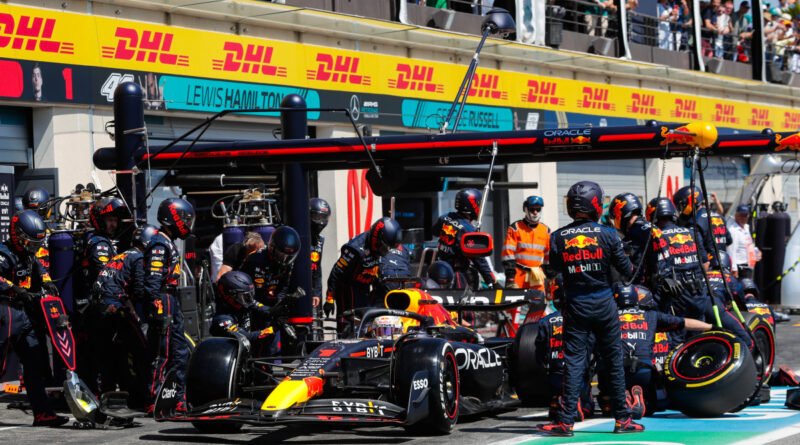
The Pit Crew
The pit crew is one of the most visible examples of teamwork in Formula 1.
During a pit stop, dozens of team members work together to:
- Change tires
- Adjust equipment
- Release the car safely
A successful pit stop may take only a few seconds.
Achieving this level of efficiency requires extensive practice and coordination.
Strategists and Decision Makers
Race strategy can determine the outcome of a Grand Prix.
Strategists evaluate factors such as:
- Tire wear
- Weather conditions
- Safety Car periods
- Competitor behavior
- Track position
Based on this information, they make critical decisions regarding pit stops and race tactics.
A well-executed strategy can transform a difficult race into a successful one.
Data Analysts
Modern Formula 1 generates enormous amounts of information.
Data analysts process and interpret data collected from numerous sensors on the car.
They help teams understand:
- Vehicle performance
- Driver behavior
- Reliability concerns
- Strategic opportunities
The ability to analyze data effectively has become a major competitive advantage.
Aerodynamic Specialists
Aerodynamics play a crucial role in Formula 1 performance.
Specialists focus on designing components that improve:
- Downforce
- Cornering speed
- Stability
- Efficiency
Even minor aerodynamic improvements can significantly impact lap times.
These experts spend countless hours testing and refining designs.
Designers and Engineers
Formula 1 cars are among the most advanced machines in the world.
Large teams of engineers collaborate on:
- Chassis design
- Suspension systems
- Cooling solutions
- Structural integrity
- Performance upgrades
Their work continues throughout the season as teams seek competitive improvements.
Factory Teams and Race Teams
Formula 1 operations extend far beyond the racetrack.
Most teams divide responsibilities between:
Factory Personnel
Factory staff focus on:
- Research and development
- Manufacturing
- Simulation work
- Vehicle testing
Trackside Personnel
Trackside staff manage:
- Race operations
- Setup adjustments
- Strategy execution
- Driver support
Close communication between these groups is essential.
Logistics: Moving a Global Operation
Formula 1 is a global championship that travels across multiple continents each season.
Logistics teams coordinate the transportation of:
- Cars
- Equipment
- Spare parts
- Tools
- Team facilities
Moving thousands of items around the world requires careful planning and execution.
Without effective logistics, race operations would be impossible.
Communication During a Race
Clear communication is critical during competition.
Team members constantly exchange information regarding:
- Tire conditions
- Weather changes
- Competitor strategies
- Mechanical concerns
- Race developments
Quick and accurate communication helps teams respond effectively to changing situations.
Practice Sessions and Team Preparation
Race weekends begin long before the Grand Prix itself.
Practice sessions allow teams to:
- Test setups
- Collect data
- Evaluate tire performance
- Prepare race strategies
Every department contributes to the preparation process.
The information gathered during practice often influences race-day decisions.
Problem Solving Under Pressure
Unexpected challenges are common in Formula 1.
Teams may face:
- Mechanical failures
- Weather changes
- Strategy complications
- Accident damage
Successful organizations respond quickly and work together to find solutions.
Problem-solving skills are essential in such a competitive environment.
Trust and Collaboration
Formula 1 teams depend heavily on trust.
Every member must perform their responsibilities accurately and consistently.
Drivers trust engineers.
Engineers trust mechanics.
Strategists trust analysts.
This interconnected structure allows the entire team to operate effectively.
Continuous Improvement
Formula 1 teams constantly search for ways to improve.
Areas of focus may include:
- Vehicle performance
- Operational efficiency
- Strategy development
- Communication systems
Success often comes from many small improvements accumulated over time.
Leadership Within the Team
Strong leadership helps coordinate complex operations.
Team leaders are responsible for:
- Setting goals
- Managing personnel
- Guiding development
- Supporting collaboration
Effective leadership helps maintain focus throughout a demanding season.
What Fans Often Don’t See
Television broadcasts typically highlight drivers and race action.
However, fans may not always see:
- Factory development work
- Simulation programs
- Engineering meetings
- Logistics planning
- Data analysis sessions
These behind-the-scenes efforts play a major role in determining results.
Why Formula 1 Is the Ultimate Team Sport
Although only one driver stands on the top step of the podium, every victory reflects the work of hundreds of people.
Formula 1 demonstrates how teamwork can combine:
- Human talent
- Technology
- Communication
- Strategy
- Innovation
No single individual can achieve success alone at this level.
Final Thoughts
Formula 1 is far more than a competition between drivers. Behind every race weekend is a highly coordinated team of engineers, mechanics, strategists, analysts, designers, and support staff working toward a common goal.
Their combined efforts influence every aspect of performance, from car development and race strategy to pit stops and problem-solving. Understanding the teamwork behind Formula 1 provides a deeper appreciation for the complexity of the sport and highlights why collaboration remains one of the most important factors in achieving success at the highest level of motorsport.