Understanding Tennis Court Surfaces and Their Impact on the Game
Tennis is unique among major sports because it is played on different court surfaces. Unlike many sports that use the same playing field throughout the season, tennis players must adapt their strategies, movement, and playing styles depending on the surface.
The three primary court surfaces used in professional tennis are hard courts, clay courts, and grass courts. Each surface affects ball speed, bounce, player movement, and match tactics in different ways.
Understanding how court surfaces influence the game can help players improve their performance and give fans a deeper appreciation of professional tennis.
Why Court Surfaces Matter
The court surface directly affects how the ball behaves after it hits the ground.
Different surfaces can influence:
- Ball speed
- Bounce height
- Player movement
- Shot selection
- Match duration
- Playing style
As a result, some players perform better on certain surfaces than others.
This is one reason why adaptability is such an important skill in professional tennis.
The Three Main Tennis Court Surfaces
Professional tennis is primarily played on:
- Hard Courts
- Clay Courts
- Grass Courts
Each surface presents unique challenges and opportunities.
Hard Courts
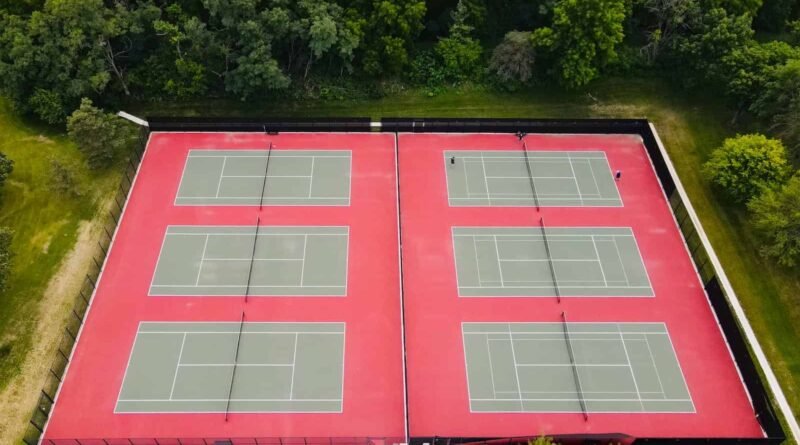
Hard courts are the most common surface in professional tennis.
They are typically made from layers of asphalt or concrete covered by an acrylic coating.
Characteristics of Hard Courts
Hard courts generally provide:
- Medium ball speed
- Consistent bounce
- Balanced playing conditions
- Reliable footing
Because they offer a balance between offense and defense, hard courts are often considered the most neutral tennis surface.
Advantages
Benefits of hard courts include:
- Predictable ball behavior
- Suitable for various playing styles
- Consistent conditions
- Wide availability
Players can often rely on their all-around skills rather than making major tactical adjustments.
Challenges
Hard courts can place significant stress on:
- Knees
- Ankles
- Hips
- Lower back
The relatively firm surface may contribute to physical fatigue during long tournaments.
Major Hard Court Tournaments
Some of the most famous hard court events include:
- Australian Open
- US Open
These tournaments often reward players with strong all-around games.
Clay Courts
Clay courts are known for producing slower-paced matches and longer rallies.
The surface is typically made from crushed brick, stone, or similar materials.
Characteristics of Clay Courts
Clay courts generally feature:
- Slower ball speed
- Higher bounce
- Reduced effectiveness of powerful serves
- Longer points
The slower conditions often allow players more time to react and construct points strategically.
Advantages
Clay courts reward:
- Patience
- Consistency
- Endurance
- Defensive skills
- Tactical intelligence
Players who excel in long rallies often perform well on clay.
Challenges
Clay courts can be demanding because points frequently last longer.
Players must develop:
- Strong fitness levels
- Effective movement
- Mental resilience
Sliding is also a major component of clay-court movement and requires specific technical skills.
Major Clay Court Tournaments
Famous clay events include:
- French Open
- Monte Carlo Masters
- Italian Open
- Madrid Open
Many specialists build their careers around success on clay courts.
Grass Courts
Grass is the oldest surface in tennis and remains one of the most distinctive.
Professional grass courts are carefully maintained natural grass surfaces.
Characteristics of Grass Courts
Grass courts typically produce:
- Fast ball speed
- Lower bounce
- Quick points
- Faster matches
The ball often stays low after bouncing, creating unique challenges for players.
Advantages
Grass courts often favor:
- Powerful serves
- Aggressive play
- Quick reactions
- Net approaches
Historically, serve-and-volley players achieved considerable success on grass.
Challenges
Grass courts require excellent timing and movement.
Players must adapt to:
- Lower bounces
- Faster conditions
- Less predictable ball movement
The shorter preparation time can make shot execution more difficult.
Major Grass Court Tournaments
The most famous grass-court tournament is:
- Wimbledon
Wimbledon is widely regarded as one of the most prestigious events in tennis.
How Surfaces Affect Playing Styles
Different surfaces often favor different types of players.
Aggressive Players
Aggressive players who rely on powerful serves and attacking shots often perform well on:
- Grass courts
- Faster hard courts
Defensive Players
Players known for consistency and court coverage may find greater success on:
- Clay courts
- Slower hard courts
All-Court Players
All-court players possess the versatility needed to compete effectively on all surfaces.
This adaptability is often a hallmark of elite professional players.
Movement Differences Between Surfaces
Movement is one of the biggest adjustments players must make.
Hard Courts
Movement is generally straightforward, with players relying on quick stops and direction changes.
Clay Courts
Sliding is an essential skill that allows players to move efficiently and maintain balance.
Grass Courts
Players must remain low and react quickly due to the fast pace and lower bounce.
Developing surface-specific movement skills is critical for success.
How Bounce Changes Across Surfaces
Bounce characteristics significantly influence strategy.
Hard Courts
- Medium bounce
- Consistent trajectory
Clay Courts
- Higher bounce
- More time to react
Grass Courts
- Lower bounce
- Faster pace
These differences affect shot selection and positioning throughout a match.
Strategy Adjustments
Successful players often adjust tactics based on the surface.
Examples include:
On Clay
- Longer rallies
- Greater patience
- Heavy topspin shots
On Grass
- Aggressive serving
- Shorter points
- Frequent net approaches
On Hard Courts
- Balanced offensive and defensive play
Strategic flexibility is a valuable skill in professional tennis.
Why Surface Adaptability Is Important
The best players in tennis history have often been successful on multiple surfaces.
Adaptability demonstrates:
- Technical versatility
- Tactical intelligence
- Physical preparation
- Mental resilience
Winning on different surfaces is often considered one of the greatest achievements in professional tennis.
Surface Preferences Among Players
Many players naturally prefer one surface over another.
Factors influencing preferences include:
- Playing style
- Movement abilities
- Physical attributes
- Technical strengths
However, the most successful players generally learn to compete effectively in all conditions.
The Role of Surface Knowledge for Beginners
Beginners can benefit from understanding court surfaces because it helps them:
- Adapt strategies
- Improve movement
- Select appropriate training methods
- Develop versatile skills
Learning how different surfaces influence the game can accelerate overall tennis development.
Final Thoughts
Tennis court surfaces play a major role in shaping how matches are played. Hard courts provide balanced conditions, clay courts emphasize endurance and strategy, and grass courts reward speed and aggressive play.
Understanding these differences helps players adapt their techniques, movement, and tactics while giving fans greater insight into the challenges faced by professional athletes. As players progress through their tennis journey, mastering multiple surfaces becomes an important step toward becoming a more complete and successful competitor.