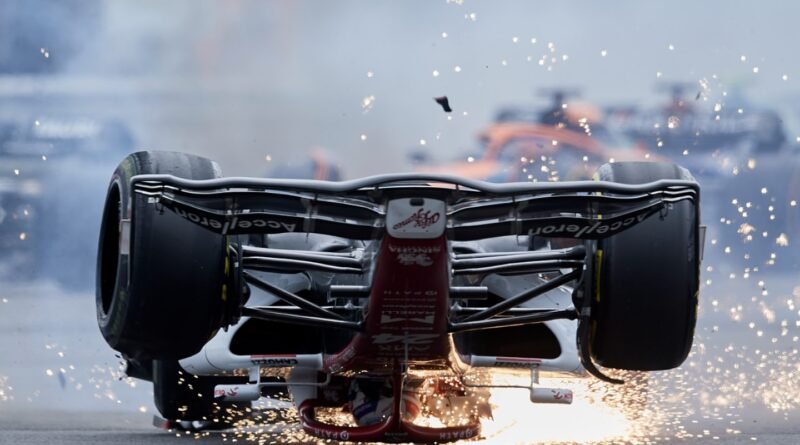
Formula 1 Safety Innovations That Changed Motorsport
Formula 1 is known for its incredible speed, cutting-edge technology, and world-class drivers. However, alongside the pursuit of performance, safety has become one of the most important areas of development in the sport.
Over the decades, Formula 1 has introduced numerous safety innovations that have dramatically reduced risks for drivers, team members, and spectators. Many of these advancements have not only transformed Formula 1 but have also influenced safety standards across the entire motorsport industry.
This article explores some of the most significant Formula 1 safety innovations that changed motorsport forever.
The Evolution of Safety in Formula 1
In the early years of Formula 1, safety standards were far less advanced than they are today.
Drivers often competed with:
- Minimal protective equipment
- Limited crash protection
- Unsafe track designs
- Basic medical support
As technology improved and awareness increased, Formula 1 began investing heavily in safety research and development.
Today, the sport is considered one of the leaders in motorsport safety innovation.
Stronger Survival Cells
One of the most important advancements in Formula 1 is the development of the survival cell, often called the cockpit safety cell.
Modern F1 cars are built around an extremely strong carbon-fiber structure designed to protect the driver during major impacts.
The survival cell helps:
- Absorb crash energy
- Maintain structural integrity
- Protect the driver’s living space
- Reduce injury risks during collisions
This technology has saved numerous lives and serves as the foundation of modern Formula 1 safety.
Carbon Fiber Construction
Carbon fiber revolutionized Formula 1 safety.
Introduced widely during the 1980s, carbon fiber is both lightweight and incredibly strong.
Benefits include:
- Increased crash resistance
- Better energy absorption
- Improved structural strength
- Enhanced driver protection
Modern race cars rely heavily on carbon-fiber components to maintain safety while maximizing performance.
The HANS Device
The Head and Neck Support (HANS) device became mandatory in Formula 1 in the early 2000s.
The HANS device helps reduce dangerous head and neck movement during crashes.
It works by connecting the driver’s helmet to a collar-like support system worn on the shoulders.
Benefits include:
- Reduced neck injuries
- Lower risk of skull fractures
- Improved crash protection
The HANS device is now widely used across many forms of motorsport.
The Halo Safety System
One of the most significant safety innovations in recent Formula 1 history is the Halo.
Introduced in 2018, the Halo is a titanium structure positioned around the cockpit.
Its purpose is to protect the driver’s head from:
- Flying debris
- Vehicle-to-vehicle contact
- Rollovers
- Large impacts
Although initially controversial among some fans, the Halo has proven highly effective and has been credited with protecting drivers in several serious accidents.
Advanced Crash Testing
Modern Formula 1 cars undergo extensive crash testing before they are allowed to compete.
These tests evaluate:
- Front impacts
- Side impacts
- Rear impacts
- Roll-over protection
- Structural integrity
Strict testing standards help ensure that every car meets high safety requirements before entering competition.
Improved Helmet Technology
Formula 1 helmets have evolved dramatically over the years.
Modern helmets are designed to withstand extremely high impact forces while remaining lightweight and comfortable.
Safety features include:
- Advanced composite materials
- Fire resistance
- Enhanced visor protection
- Improved energy absorption
Helmets are continuously updated to meet increasingly demanding safety standards.
Fire-Resistant Racing Suits
Driver safety extends beyond the car itself.
Modern Formula 1 racing suits are made from specialized fire-resistant materials designed to provide protection during fire-related incidents.
Additional protective equipment includes:
- Gloves
- Boots
- Balaclavas
- Undergarments
Together, these items create multiple layers of protection for drivers.
Better Circuit Design
Track safety has improved significantly over the years.
Modern Formula 1 circuits often feature:
- Larger run-off areas
- Improved barriers
- Advanced fencing systems
- Safer corner designs
- Enhanced spectator protection
These improvements help reduce the severity of accidents and provide drivers with more opportunities to avoid dangerous impacts.
Energy-Absorbing Barriers
Modern circuits use specialized barriers designed to absorb impact energy.
Examples include:
- TecPro barriers
- SAFER barriers
- Advanced tire barrier systems
These technologies help reduce the forces experienced by drivers during crashes.
By absorbing energy more effectively, barriers contribute significantly to injury prevention.
Medical Response Improvements
Formula 1 has invested heavily in emergency response systems.
Modern events feature:
- Highly trained medical teams
- Advanced medical vehicles
- On-site medical centers
- Rapid response protocols
Quick medical intervention can be critical following serious accidents.
The sport’s medical standards are among the highest in professional sports.
Improved Seat Design
The driver’s seat plays an important role in safety.
Modern Formula 1 seats are custom-molded to fit each driver.
Benefits include:
- Better body support
- Reduced movement during crashes
- Improved impact protection
- Faster extraction when necessary
Seat technology continues to evolve alongside other safety systems.
Wheel Tethers
One common danger in motorsport accidents is detached wheels.
To address this issue, Formula 1 introduced wheel tethers.
These strong cables are designed to keep wheels attached to the car during impacts.
Wheel tethers help reduce the risk of debris-related injuries to drivers, marshals, and spectators.
Data and Safety Research
Formula 1 teams collect vast amounts of performance and crash data.
This information helps engineers and safety experts:
- Analyze accidents
- Improve designs
- Develop new safety systems
- Identify potential risks
Continuous research allows safety standards to evolve and improve over time.
Influence on Other Motorsport Series
Many safety innovations developed in Formula 1 have spread throughout motorsport.
Examples include:
- HANS devices
- Advanced crash structures
- Improved helmets
- Halo-style protection systems
- Enhanced medical procedures
As a result, Formula 1’s commitment to safety has benefited drivers across numerous racing categories worldwide.
The Balance Between Speed and Safety
One of Formula 1’s greatest achievements is maintaining high-performance racing while continuously improving safety.
Engineers and governing bodies work together to ensure that innovation supports both competition and driver protection.
This balance allows the sport to remain exciting while reducing unnecessary risks.
Final Thoughts
Formula 1 has played a leading role in the development of motorsport safety. Innovations such as the Halo, HANS device, carbon-fiber survival cells, advanced helmets, fire-resistant equipment, and improved circuit designs have transformed the sport and saved lives.
While racing will always involve some level of risk, Formula 1’s commitment to safety demonstrates how technology and innovation can make competition significantly safer. These advancements continue to influence motorsport around the world, benefiting drivers at every level of racing and helping shape the future of the sport.