How to Improve Your Tennis Footwork and Court Movement
Tennis is often described as a game of movement. While powerful serves and accurate groundstrokes are important, many matches are won by players who move efficiently around the court.
Good footwork allows players to reach more balls, recover faster, maintain balance, and execute shots with greater consistency. In fact, many coaches believe that footwork is one of the most important skills a tennis player can develop.
Whether you are a beginner or an experienced player, improving your court movement can have a significant impact on your overall performance.
Why Footwork Matters in Tennis
Every shot in tennis begins with positioning.
If a player is not in the correct position, even strong technical skills may not be enough to produce an effective shot.
Good footwork helps players:
- Reach the ball more quickly
- Maintain balance
- Improve shot accuracy
- Recover after each shot
- Reduce unforced errors
- Conserve energy during long matches
Efficient movement often makes the game feel easier because players spend less time reacting and more time preparing.
Stay on the Balls of Your Feet
One of the most important fundamentals of tennis movement is staying light on your feet.
Players who remain on the balls of their feet can react more quickly to changes in direction.
This athletic position helps:
- Improve balance
- Increase agility
- Allow faster acceleration
- Enhance court coverage
Standing flat-footed can slow reactions and make movement less efficient.
Master the Split Step
The split step is a small hop performed just before the opponent makes contact with the ball.
This movement prepares the body to move in any direction.
Benefits of the split step include:
- Faster reactions
- Better balance
- Improved anticipation
- More explosive movement
Professional players use the split step before nearly every shot because it helps them respond quickly to incoming balls.
Focus on Small Adjustment Steps
Many beginners attempt to reach every ball using large strides.
However, experienced players often rely on small adjustment steps as they approach the ball.
These steps help players:
- Fine-tune positioning
- Maintain balance
- Create better spacing
- Improve shot preparation
The ability to make quick adjustments often leads to cleaner and more consistent ball striking.
Improve Lateral Movement
Tennis requires constant side-to-side movement.
Developing strong lateral movement helps players cover the court more effectively.
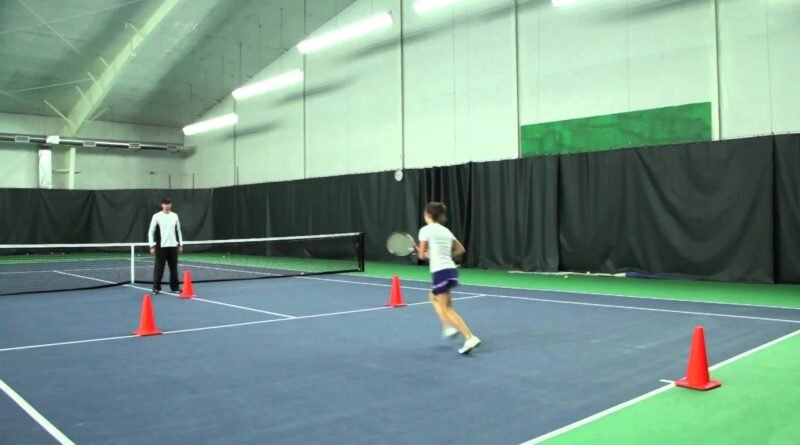
Useful drills include:
- Side shuffles
- Cone drills
- Ladder exercises
- Shadow movement drills
Improved lateral speed allows players to defend difficult shots and recover more efficiently between points.
Learn Proper Recovery Positioning
Many players focus only on reaching the ball but forget about recovering afterward.
After hitting a shot, players should return toward an appropriate court position based on the situation.
Proper recovery helps:
- Prepare for the next shot
- Improve court coverage
- Reduce defensive pressure
- Maintain tactical control
Strong recovery habits can significantly improve overall movement during rallies.
Build Explosive Speed
Tennis points often involve short bursts of speed rather than long-distance running.
Players frequently accelerate toward balls within a few seconds.
Exercises that can improve explosiveness include:
- Sprint drills
- Jump training
- Agility ladders
- Short-distance acceleration drills
Improved explosiveness helps players reach difficult shots more quickly and create better offensive opportunities.
Strengthen Your Legs
Strong legs provide the foundation for effective court movement.
Tennis players rely heavily on their lower-body muscles for:
- Sprinting
- Stopping
- Changing direction
- Jumping
- Maintaining balance
Exercises such as squats, lunges, step-ups, and bodyweight movements can help build the strength needed for efficient movement.
Improve Balance and Stability
Balance is essential in tennis because players often hit shots while moving or changing direction.
Better balance can help:
- Improve shot consistency
- Reduce recovery time
- Increase movement efficiency
- Prevent unnecessary errors
Single-leg exercises and stability drills are often useful for developing this skill.
Develop Better Endurance
Long matches can place significant demands on physical conditioning.
Players who become fatigued often experience slower footwork and poorer decision-making.
Cardiovascular training may help improve:
- Stamina
- Recovery between points
- Movement quality late in matches
- Overall athletic performance
Good endurance allows players to maintain strong movement throughout an entire match.
Practice Shadow Footwork
Shadow footwork involves practicing tennis movement patterns without hitting a ball.
This type of training allows players to focus entirely on movement mechanics.
Benefits include:
- Improved muscle memory
- Better positioning habits
- Increased movement efficiency
- Enhanced court awareness
Many professional players include shadow movement drills in their regular training routines.
Anticipate the Opponent’s Shot
Movement is not only physical—it is also mental.
Players who anticipate effectively often appear faster because they begin moving earlier.
You can improve anticipation by:
- Watching your opponent’s body position
- Recognizing common shot patterns
- Studying match situations
- Staying mentally engaged
Better anticipation can reduce the amount of running required and improve overall court coverage.
Avoid Common Footwork Mistakes
Many players unknowingly limit their performance through poor movement habits.
Common mistakes include:
- Standing flat-footed
- Skipping the split step
- Taking oversized steps
- Recovering too slowly
- Watching shots instead of moving
- Poor balance during strokes
Identifying and correcting these habits can lead to significant improvement.
Practice Movement With Purpose
Simply playing matches may not always improve footwork.
Dedicated movement training often produces better results.
A balanced practice routine may include:
- Agility drills
- Court movement exercises
- Fitness training
- Match play
- Technical instruction
Combining these elements helps develop more complete movement skills.
The Connection Between Footwork and Shot Quality
Many players focus exclusively on improving their strokes.
However, better footwork often leads directly to better shot execution.
When players arrive at the ball in a balanced position, they are more likely to:
- Hit accurately
- Generate power
- Control direction
- Reduce mistakes
In many cases, improved footwork produces faster results than changing stroke mechanics.
Final Thoughts
Great tennis movement is built on agility, balance, speed, anticipation, and efficient positioning. By developing proper footwork habits, players can reach more balls, recover faster, and perform more consistently under pressure.
Whether you are a beginner learning the basics or an experienced player seeking improvement, investing time in footwork training can elevate every aspect of your game. Strong movement not only helps you play better tennis but also allows you to compete with greater confidence and efficiency on the court.